With the Eurozone in a mess, Obama has the political space for a “radical” stand

Robert Zoellick, the only neo-con who survived the Bush era because he left in time , has just announced that he will step down from the top job in the World Bank, and not look for a new term in 1818 H street in Washington.

This move, already in the air given the ambition of the democrats not to leave a Republican-appointee in place for a second term at the World Bank, renews again the well known saga about the appointment of next Bank president: again an American politician or banker? Or for the first time ever since Bretton Woods in 1944 will a non-American citizen be allowed to head the institution?

Despite the whole debate and new commitment to a procedure for a transparent and merit-based selection process to find the best candidate for the top job of the IMF, the Europeans gave a bad example in 2011 by forcing through Madame Lagarde at a time of profound crisis in “old Europe”. Hence the need for European governments to be sure that the IMF will intervene in case of a show down of the Eurozone. This is quite understandable for a bunch of countries who are not able even to decide among themselves about how to help each other out of the crisis. Continue reading

Campaigners demand fair selection process as Zoellick finally says he will step down

Increased rumours this week proved to be right as Zoellick just announced today that he will step down at the end of his first term as World Bank president, on 30 June. Reacting to the announcement, a global coalition of campaigners has issued an open letter to World Bank governors calling for an open and merit-based process to elect the next Bank president, and for developing countries to determine the selection: Continue reading

Poll: who should be the next World Bank president?

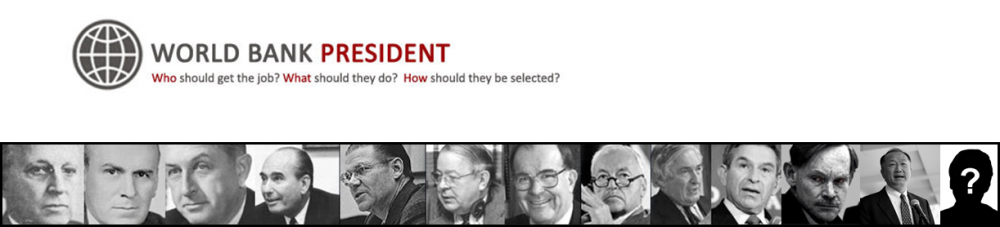
The US has monopolised the Bank presidency since 1944, but leadership selection at the International Financial Institutions is becoming increasingly contested. There have been repeated promises by the Bank to open up the process and select candidates based on merit, in a fair and transparent way. As developing countries become increasingly confident and assertive this could be the year that sees the emergence of a real challenge against the US hold over the position.

But who would the credible candidates be?  Below are nine heavy-weight possible candidates from developing countries. Who do you think would be the best for the job?

Sorry, there are no polls available at the moment.

Continue reading

Is this finally the week? Reality check in the US

Inside sources in Washington are abuzz. It seems this will be the week according to people in the know, and Zoellick will imminently be announcing his attention to not seek a second term. They didn’t have an exact date for the announcement – could be Tuesday or as late as Friday. But now is really the time to start thinking about the processes – after all a well designed process would have started 6 weeks ago.

So the post yesterday by Nancy Birdsall over at CGD provides a timely look into the US political constraints. She asks:

Can the Obama White House in an election year, facing a Congress suspicious of a globally honored president, eschew pushing through its own American candidate? …

Continue reading