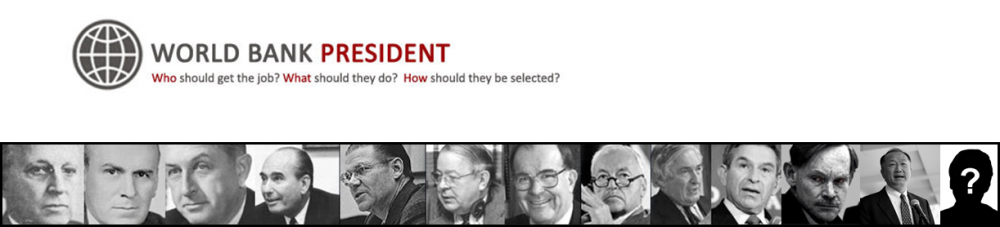
Apparently we are still at first base when it comes to appointing a new World Bank president. Many people are keen for a quick resolution on this issue – not least many of us bloggers, the German government (which would hate to have the full G8 summit dominated by this same question), and Bank staff. It appears, though that we may have to wait some time. Deputy Secretary of the US Treasury Robert Kimmit told reporters at the G8 finance ministers meeting in Potsdam that his boss Henry Paulson “is not at this time talking names of people but how best to run the process to end up with the best person to run this important institution”.
Monthly Archives: May 2007
Next World Bank president: ‘likely to be American’.
You could see it as stating the obvious. Or as helping to make it less likely that he’ll have to continue working with his rival and soon-to-be-former boss. Either way UK Chancellor Gordon Brown has briefed Reuters that the next World Bank is likely to be an American (i.e. not Tony Blair). Also ‘peppered’ with questions at the G8 finance minsters’ get-together was US Deputy Treasury Secretary Robert Kimmitt, one of the rumoured candidates. Continue reading
What qualifications needed?
Moisés Naím, editor in chief of Foreign Policy magazine, served as Venezuela’s minister of trade and industry and as executive director of the World Bank in the early 1990s, and has has published a very thoughful opinion piece about the qualifications a WBG president should bring to the job. Posted yesterday in the Dallas News, presumably an outlet that is well-read in and near the White House.
Who else should leave with Wolfowitz?
A persistent question keeps popping up in world bank staff comments and discussions inside the bank. Should those closely associated with Wolfowitz and Shaha Riza also resign or be asked, gently or not, to leave. Continue reading
A US choice, fine. But why does it have to be an American?
The US administration is giving every possible signal that the next president of the World Bank will be chosen by the US. Europe seems to be giving its own signals that it agrees. Continue reading